Bringing a new stylist into your salon is an exciting time, full of potential for growth and fresh energy. However, the first 30 days are critical – they set the tone for your new team member's entire journey with your business. Without a clear, supportive onboarding process, even the most talented stylist can feel lost, undervalued, and quickly disengaged, leading to high turnover and wasted resources.
Effective onboarding goes beyond just showing them where the coffee machine is. It's about integrating them seamlessly into your salon's culture, equipping them with the right tools, and setting them up for success from day one. This proactive approach ensures your new stylist feels confident, understands their role, and starts contributing positively to your salon's reputation and revenue much faster.
1. Laying the Foundation: Staff Profile & Basic Setup
The first step in integrating any new team member is to create their official profile. This isn't just about paperwork; it's about establishing their identity within your salon's system, which is crucial for everything from booking clients to tracking their performance.
- Gather Essential Information: Collect their full name, mobile number, email address, emergency contact details, and bank account information for salary processing.
- Add a Professional Photo: A clear, friendly photo helps clients recognise them and adds a personal touch to your booking system or website.
- Define Their Role: Clearly designate their role (e.g., Senior Stylist, Junior Stylist, Hair Spa Therapist). This impacts their permissions and how they interact with your salon's operations.
- Assign a Unique Login (if applicable): If your stylists use a system to manage their own appointments or view their schedule, ensure they have their own secure login credentials.
A good salon management software helps you streamline this. With SalonBill, for instance, you can easily add your new stylist's profile, including their mobile number and designation, ensuring all their activities are correctly attributed from the start. This also lays the groundwork for clear communication, as their registered mobile number will be used for important updates and reports.
2. Defining Responsibilities: Role Permissions
Once your new stylist's profile is set up, the next critical step is to define their access levels and permissions within your salon's operating system. This ensures they have the tools they need to perform their job efficiently without inadvertently accessing sensitive business information or making unauthorised changes.
- Understand Different Roles: Differentiate between roles like stylist, receptionist, manager, and owner. Each role requires different access. A stylist, for example, needs to view their appointment schedule, create job cards, and perhaps process payments, but might not need access to detailed financial reports or staff incentive settings.
- Set Specific Permissions: Decide what actions your stylist can perform:
- Can they book appointments for other stylists?
- Can they apply discounts beyond a certain limit? (Remember, managers can never exceed 50% discount in SalonBill, and owners set overall limits. More on discounts.)
- Can they view other staff members' performance data?
- Can they access cash drawer summaries or modify past bills? (Corrections to cash drawer need permission and a reason, recorded in audit history in SalonBill. Learn about cash drawer management.)
- Regularly Review Permissions: As your stylist grows or takes on new responsibilities, their permissions might need adjustment.
Using a system like SalonBill allows you to assign specific role-based permissions, giving you granular control over what each staff member can see and do. This not only protects your business but also empowers your stylists by giving them precisely the tools they need, fostering trust and accountability.
3. Motivating Performance: Incentive Designation
Incentives are powerful motivators. Setting up a clear and fair incentive structure from day one ensures your new stylist understands how their hard work directly translates into higher earnings. This transparency is key to keeping them engaged and focused on achieving their targets.
Establishing Incentive Designations
Not all stylists are the same, and neither should their incentives be. You can create different incentive designations based on experience, seniority, or specialisation. For each designation, define:
- Service Slabs: A percentage of their normal-service sales (after discount) that they earn. This might increase as their daily sales cross certain thresholds. For example, 10% on sales up to ₹5,000, and 15% on sales above ₹5,000 in a day.
- Product Sales Rate: A percentage they earn on product sales.
- Membership Sales Rate: A percentage on memberships or packages they sell. Remember, in SalonBill, membership-sale incentives stay pending until the client has paid for the membership in full. Understand memberships.
- Helper Incentives: If stylists often work together, define how incentives are shared when one acts as a 'helper' to the main stylist. The main stylist keeps the sale, but the helper shares the incentive.
Worked Example: Setting Up Incentives
Let's say you onboard a 'Junior Stylist' and a 'Senior Stylist'.
- Junior Stylist Designation:
- Service Incentive: 8% on all normal-service sales.
- Product Sales: 5% of product sales.
- Membership Sales: 3% of membership value (pending full payment).
- Senior Stylist Designation:
- Service Incentive: 12% on daily normal-service sales up to ₹8,000, then 18% on sales above ₹8,000.
- Product Sales: 7% of product sales.
- Membership Sales: 5% of membership value (pending full payment).
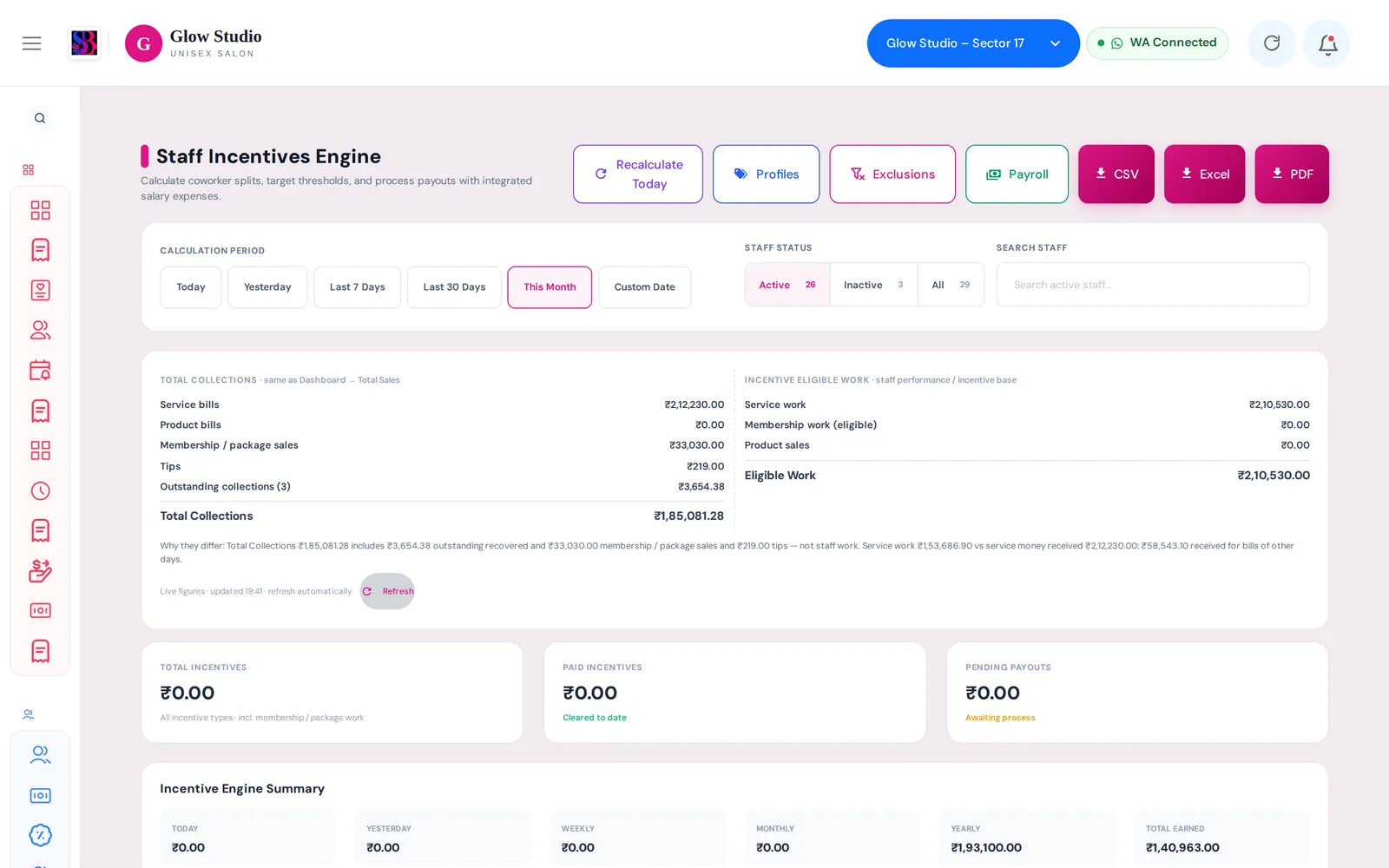
By clearly defining these in SalonBill's staff incentives settings, the system automatically calculates their earnings, providing transparency and reducing disputes. This allows your new stylist to immediately see their potential for growth and earnings.
4. Ensuring Accountability: Attendance Setup
Punctuality and consistent attendance are cornerstones of a professional salon. Establishing a clear attendance tracking system from day one sets expectations and ensures smooth operations, especially during peak hours. This is also vital for accurate payroll processing.
- Communicate Expectations: Clearly outline your salon's policies on working hours, breaks, and procedures for reporting sick leave or late arrivals.
- Implement a Reliable Tracking System: Manual registers can be prone to errors or manipulation. Consider digital solutions for accuracy.
- Define Salon Radius: If using a GPS-based system, ensure the salon's physical radius is accurately mapped.
For modern salons, SalonBill's GPS attendance feature is a game-changer. Your stylists can punch in and out directly from the SalonBill mobile app, but only when they are physically within your salon's defined radius. This prevents fake-location punches and provides an accurate record of their work hours and late arrivals. This data can then be easily exported for your accountant to process salaries.
5. Empowering Your Stylist: Daily Performance Insights
One of the best ways to keep a new stylist motivated and help them grow is to provide regular, actionable feedback. Daily insights into their performance can be incredibly empowering, allowing them to track their progress and identify areas for improvement proactively.
- What to Track: Focus on key metrics relevant to their role, such as:
- Total service revenue generated.
- Number of clients served.
- Number of services performed.
- Product sales.
- Incentives earned for the day.
- Provide Easy Access: Make this information readily available to them in a digestible format.
This is where technology truly shines. SalonBill offers a nightly WhatsApp link to each staff member for their own daily report. Imagine your new stylist receiving a concise summary of their day's performance directly on their phone. This immediate feedback loop is invaluable for self-correction and celebrating small wins, building confidence and ownership over their work.
6. The First Month Review: Nurturing Growth
A formal 30-day review is essential for consolidating your new stylist's onboarding experience. It's an opportunity for a two-way conversation, allowing you to provide constructive feedback and for them to voice any concerns or ask questions.
- Schedule the Review: Set a specific time and date for this meeting towards the end of their first month.
- Prepare Performance Data: Gather objective data on their performance during the first 30 days. This includes:
- Service revenue generated.
- Number of clients served.
- Repeat client percentage (if applicable).
- Average service value.
- Total incentives earned.
- Attendance record (punctuality, any absences).
You can easily access this data from SalonBill's staff performance page, which allows you to filter by any period and export the details.
- Discuss Key Areas: Cover the following during the review:
- Strengths: Acknowledge what they've done well.
- Areas for Improvement: Provide specific, actionable feedback. For example, "Your haircuts are excellent, but let's work on recommending add-on services like hair spas to increase average bill value."
- Client Feedback: Share any positive or constructive client feedback received.
- Training Needs: Identify any gaps in skills or knowledge where further training might be beneficial.
- Goals for the Next 30-60 Days: Set clear, measurable goals together.
- Open Discussion: Encourage them to share their experiences, challenges, and suggestions.
- Document the Review: Keep a record of the discussion, agreed-upon goals, and any follow-up actions. This creates a transparent performance history.
This structured review demonstrates your investment in their growth and helps solidify their place within your team. It transforms a simple job into a career path, fostering loyalty and long-term commitment.
Your New Stylist Onboarding Checklist
- ✓ Create a detailed staff profile with mobile number and photo.
- ✓ Assign appropriate role permissions to ensure secure and efficient access.
- ✓ Set up clear incentive designations (service slabs, product/membership rates).
- ✓ Implement a reliable attendance tracking system (e.g., GPS attendance).
- ✓ Arrange for daily performance reports (e.g., nightly WhatsApp link).
- ✓ Schedule and prepare for a comprehensive 30-day performance review.
- ✓ Foster open communication and provide continuous support.